Translational Immunocardiology
Team
Prof. Dr.
Mona Malek Mohammadi
Head of Translational Immunocardiology
Topics and Vision
Cardiovascular Regeneration
The mammalian heart has a remarkable capacity to regenerate early in life, but this potential is lost to a great extent shortly after birth.
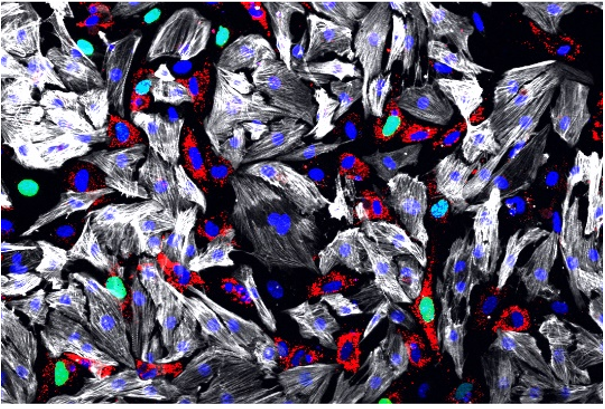
Our research seeks to define the cellular, molecular, and intercellular mechanisms that enable cardiac regeneration shortly after birth and to understand the changes that later shift the heart toward maladaptive remodeling and failure. We focus on the dynamic crosstalk between cardiomyocytes, immune cells, fibroblasts, and endothelial cells that orchestrates these regenerative and remodeling responses.
Our vision is to transform insights from the regenerating neonatal heart into new therapeutic concepts for cardiovascular disease. By identifying the mechanisms that preserve regenerative competence and learning how to reactivate these programs later in life, we aim to move beyond limiting cardiac damage toward actively promoting functional heart regeneration.
Projects
- Fibroblast–Cardiomyocyte Crosstalk in Cardiac Regeneration
- Mechanosensing as an underlying Trigger of Cardiac Regenerative Programs
- Macrophage–Fibroblast Crosstalk in Cardiac Repair and Regeneration
- Training the Heart: Establishing Regenerative Memory
- Innate Immune Memory in Cardiac Regeneration
Models
- Transgenic mouse models and genetic fate mapping
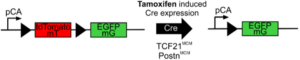
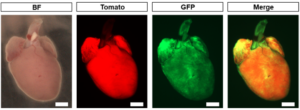
Genetic fate mapping of fibroblasts.
A) genetic structure of mTmG mouse model, which expresses EGFP upon Cre expression under a cell type specific promoter.
B) Macroscopic images of the transgenic heart at postnatal day 14 in bright field (BF) and fluorescence channels showing Tomato, GFP expression in the heart. (picture rights Julia Nicke)
- Neonatal cardiac injury and pressure-overload models, including neonatal transverse aortic constriction (nTAC), neonatal pulmonary artery banding (nPAB), cryoinjury, left anterior descending coronary artery (LAD) ligation, and cauterization of the left coronary artery root
- Adult cardiac injury and pressure-overload models, including transverse aortic constriction (TAC) and myocardial infarction (MI)
- Primary cardiac cell and co-culture models, including cardiomyocytes, cardiac fibroblasts, endothelial cells, and immune cells
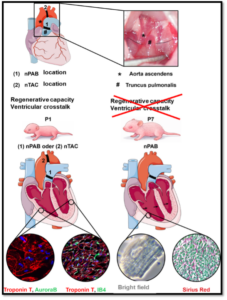
(nTAC) and pulmonary artery banding (nPAB).
At postnatal day 1 (P1) induces regenerative response
and at P7 induces a maladaptive response. Cardio News –
Ausgabe 06 – 19. Juni 2026
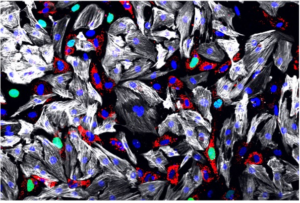
was used to assess cell cycle activity. (picture rights Julia Nicke)
Methods & Technologies
- Cardiac echocardiography (2D, 3D and 4D) and Doppler flow velocity measurements
- Molecular and histological characterization, including real-time quantitative PCR (RT-qPCR), Western blotting, immunofluorescence, immunohistochemistry, fibrosis assessment, cardiomyocyte proliferation and survival, vascularization, and extracellular matrix remodeling
- Flow cytometry and cell sorting
- Cell culture/co-culture
- Single-cell/ single-nucleus sequencing and bioinformatic analysis including subpopulation characterization, trajectory analysis, cellular crosstalk and signaling networks
- In vivo therapeutic delivery
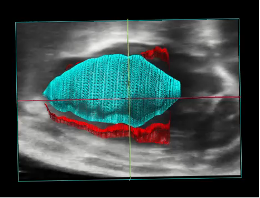
3D Echocardiographic imaging of the heart at postnatal day 21.
4D Echocardiography
Talks
2026, 39th Meeting of the European Section of the International Society for Heart Research (ISHR), University of Birmingham, UK
2025, Visual Sonics meeting, Online Workshop
2025, ISHR- World Meeting, Nara, Japan
2025, German Society of Cardiology (DGK), annual meeting, Mannheim
2024, DGK, annual meeting, Mannheim
2024, Visual Sonics meeting, Hannover Medical School
2024, Bonfor Symposium, University Hospital Bonn
2023, German Society of Physiology (DPG), Berlin
2023, ISHR, Young Investigator Award, Porto
2021, Scientica, Online Webinar
2021, Visual Sonics meeting, Online Webinar
2016, DGK, annual meeting, Keynote speaker
Awards
2025, Poster Award to Reda Djabour at Bonfor symposium
2024, Project award to Mona Malek Mohammadi at BONFOR symposium
2024, Research Award to Fabian Ebach from the German Society of Neonatology and Intensive Care
2023, Young Investigator Award to Mona Malek Mohammadi from ISHR, Porto, Portugal
2023, Abstract price of Segnitz-Ackermann-Stiftung to Julia Nicke from German Foundation for Heart Research and DGK
2019, Poster Award to Mona Malek Mohammadi at German Center for Cardiovascular Research (DZHK)
2018, Poster Award to Mona Malek Mohammadi from ISHR, Amsterdam, Netherlands
Funding
German Research Foundation grant (DFG, MA 11580/2-1) to Mona Malek Mohammadi for “Unravelling the Role of Fibroblasts in Driving Cardiomyocyte Regeneration in the Neonatal Mouse Heart”
German Foundation for Cardiovascular Research (DHS) grant to Mona Malek Mohammadi for “From Macrophage Biology Towards Cardiac Regeneration”
BONFOR grant to Mona Malek Mohammadi for “Investigating the Role of Macrophages in Cardiac Regeneration Ability of Neonatal Mice in Response to Pressure Overload”
BONFOR grant to Fabian Ebach for “Investigation of Right Ventricular Regeneration, and Right and Left Ventricular Crosstalk Upon Pressure Overload in the Neonatal Mouse Heart”
BONFOR startup grant to Mona Malek Mohammadi for “The Role of Cardiac Fibroblasts in the Adaptive Response of the Neonatal Mouse Heart upon Pressure Overload”
German Society of Cardiology (DGK) Startup grant to Mona Malek Mohammadi for “Characterization of the Endothelial and Cardiomyocyte Transcriptome During Adaptive Neonatal Mouse Pressure Overload”
German Center for Cardiovascular Research (DZHK) for Mona Malek Mohammadi for “Coronary Heterogeneity in Heart Regeneration: Finding Common Traits Using a Comparative Approach”
Collaborations
Prof. Elvira Mass, Developmental Biology of the Immune System, Life and Medical Sciences (LIMES) Institute, University of Bonn, Bonn, Germany.
Prof. Dr. Hemmen Sabir, Department of Neonatology and Pediatric Intensive Care, Children’s Hospital University of Bonn
Prof. Andreas Mülle,Department of Neonatology and Pediatric Intensive Care, University Hospital Bonn, Bonn, Germany
Prof. Dr. Wilhelm RoellDepartment of Cardiac Surgery, University Hospital Bonn, Venusberg-Campus 1, 53127 Bonn, Germany
Prof. Dr. Bernd Fleischmann, Institute of Physiology I, Medical Faculty, University of Bonn, Venusberg-Campus 1, 53127 Bonn, Germany
Prof. Dr. Hamid Kashkar,Institute for Molecular Immunology, University of Cologne, Center for Molecular Medicine Cologne (CMMC), Cologne Excellence Cluster for Aging and Aging-Associated Diseases (CECAD), Cologne, Germany
Prof. Dr. Gilbert Weidinger Institute of Biochemistry and Molecular Biology, Ulm University
Prof. Dr. Kai C. WollertDepartment of Cardiology and Angiology, Division of Molecular and Translational Cardiology, Hannover Medical School, Germany
Prof. Dominic Grün,Medical System Biology, Quantitative single-cell biology of the immune system, University of Würzburg
Prof. Dr. Gergana Dobreva, Experimental Cardiology, Medical Faculty Mannheim of Heidelberg University
Prof. Dr. Johannes Backs, Institute of Experimental Cardiology, Heidelberg University
Dr. Filipa Simoes, Institute of Developmental and Regenerative Medicine, Department of Physiology, Anatomy and Genetics, University of Oxford, Oxford, United Kingdom
Prof. Dr. Mauro Giacca, King’s College London, British Heart Foundation (BHF) Centre of Research Excellence, London, United Kingdom
Most Relevant Publications
1. J. Nicke, A. Goldspink, B.K. Fleischmann, M. Malek Mohammadi. TLR2 mediates cell cycle re-entry and survival of neonatal cardiomyocytes in response to injury. Cell Commun Signal. 2026 Aug 14;24(1):444. DOI: 10.1186/s12964-026-03147-w
2. F. Ebach, J. Nicke, T. Hu, H. Sabir, A. Müller, B. K. Fleischmann, M. Malek Mohammadi. Pressure Overload-Induced Ventricular Crosstalk Activates Regenerative Mechanisms in the Contralateral Ventricle in Neonatal Mice. Circulation 2026;153:1261–1264.DOI:
10.1161/CIRCULATIONAHA.125.077779
3. T. Hu, B. Fleischmann, M. Malek Mohammadi. Cauterization of the root of the left coronary
artery: a straightforward, large and reproducible ischemic injury model in neonatal mice. LabAnimal. 53, 308–326 (2024).DOI: 10.1038/s41684-024-01443-x
4. T. Hu*, M. Malek Mohammadi*, F. Ebach, M. Hesse, M. I. Kotlikoff, B.K. Fleischmann. Right
ventricular cardiomyocyte expansion accompanies cardiac regeneration in newborn mice after large left ventricular infarcts. JCI insight 2024 Feb 6;9(5):e176281. *Equal contribution. DOI:10.1172/jci.insight.176281
5. M. Malek Mohammadi*, A. Abouissa, J. Heineke*. A Surgical Mouse Model of Neonatal Pressure Overload by Transverse Aortic Constriction. Nature Protocols 16, 775–790 (2021). DOI: 10.1038/s41596-020-00434-9
6. M. Malek Mohammadi, A. Abouissa, A. Isyatul, Y. Xie, J. Cordero, A. Shirvani, A. Gigina, M. Engelhardt, F. Trogisch, R. Geffers, G. Dobreva, J. Bauersachs, J. Heineke. Induction of cardiomyocyte proliferation and angiogenesis protects neonatal mice from pressure overload- associated maladaptation. JCI insight (2019) 23; 5. pii: 128336. DOI:
7. M. Malek Mohammadi, B. Kattih, A. Grund, N. Froese, M. Korf-Klingebiel, A. Gigina, U. Schrameck, C. Rudat, Q. Liang, A. Kispert, KC. Wollert, J. Bauersachs, J. Heineke. The transcription factor GATA4 promotes myocardial regeneration in neonatal mice. EMBO Molecular Medicine 2017; 9(2):265-279. DOI: 10.15252/emmm.201606602